Anti-Human CALRL Monoclonal Antibody

Product Category: All Products

Product Code: CABh-25327
Isotype: IgG2a
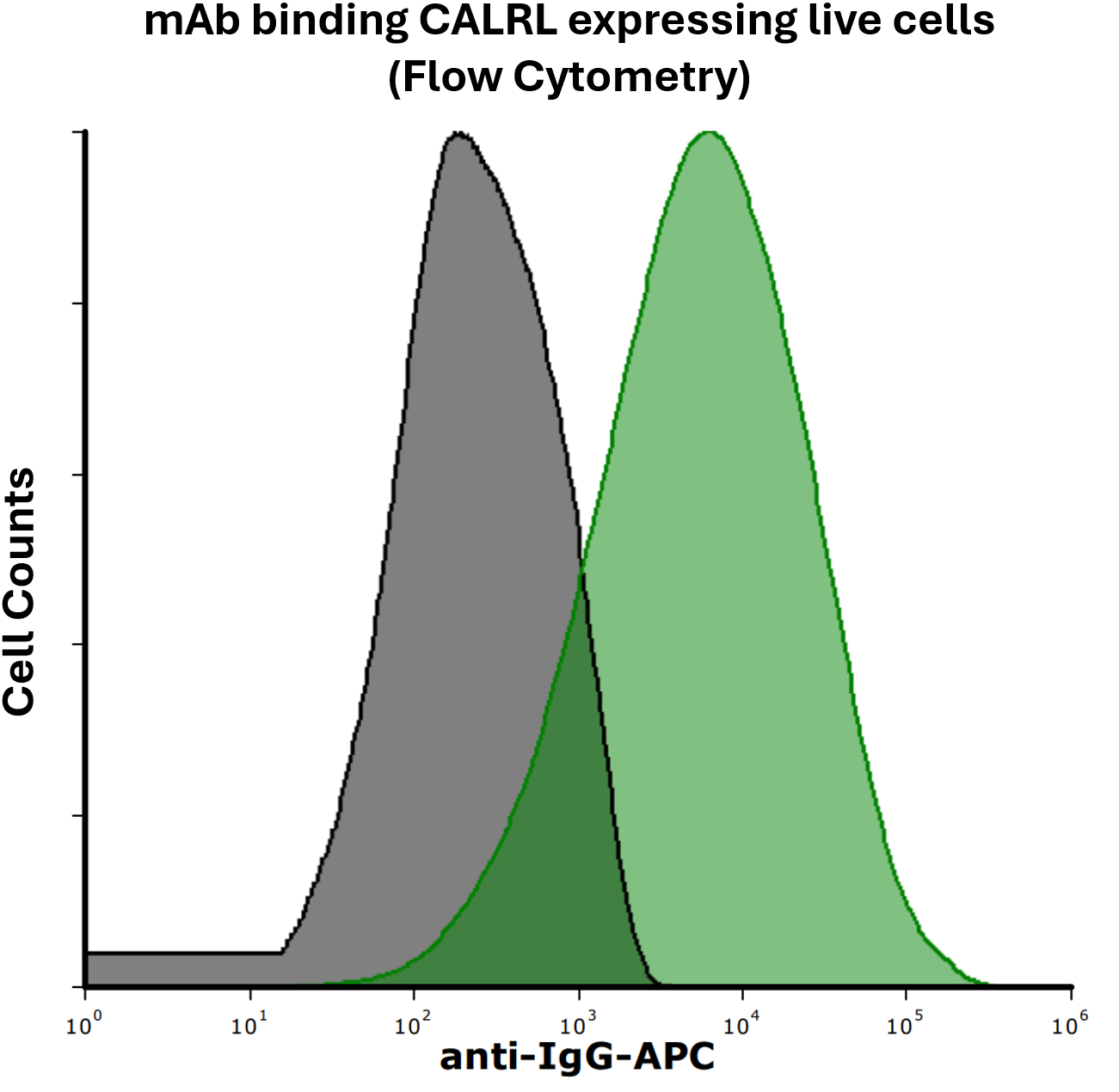
Specificity: Detects human calcitonin receptor-like receptor/CALRL transfectants but not irrelevant transfectants in flow cytometry.
Host Species: Mouse
Immunogen: CALRL N-terminus extracellular domain, the exact sequence of the immunogen is proprietary.; UniProt # Q16602
Purification: Affinity Purification
Expression Host: HEK293T
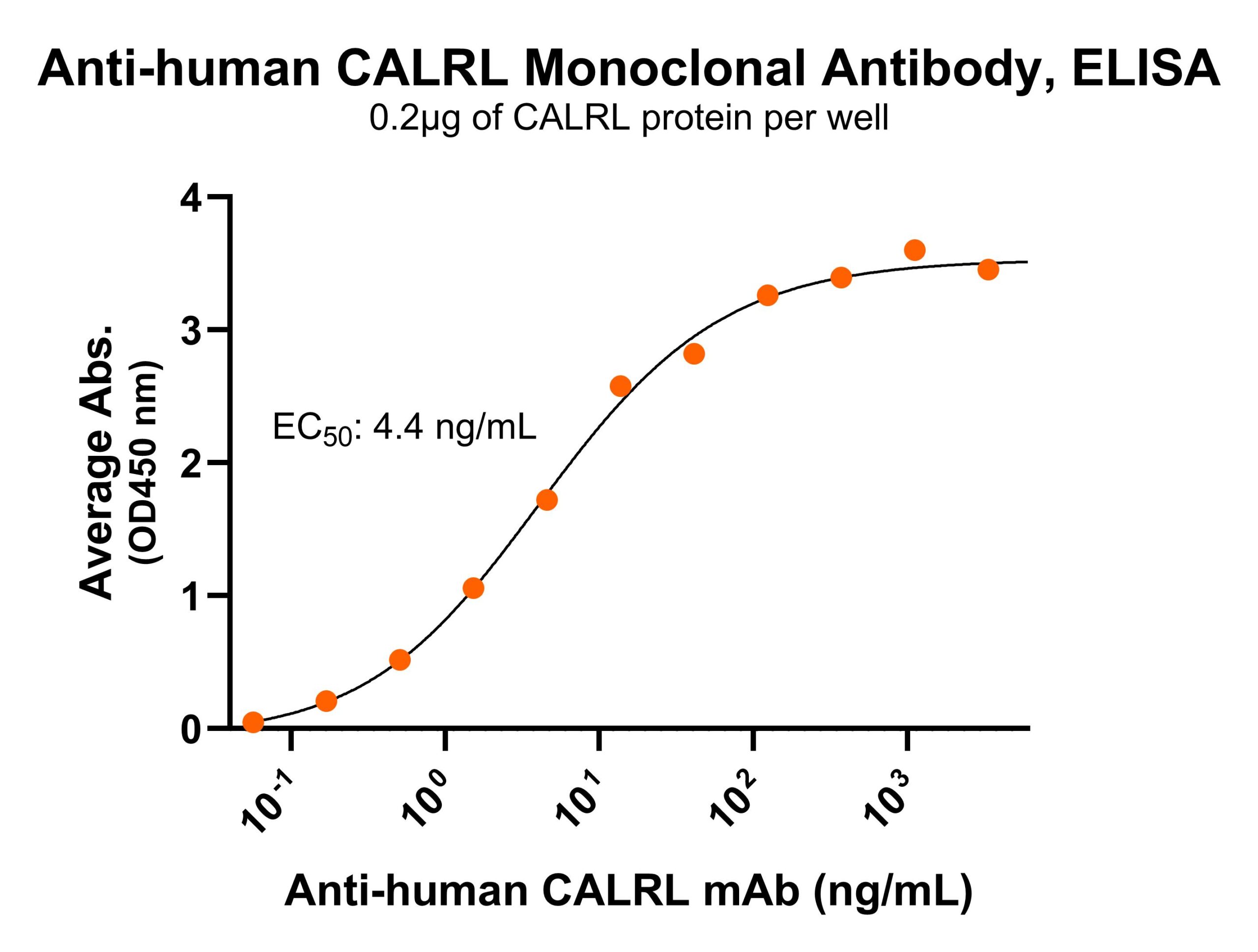
Verified Applications: ELISA, Flow Cytometry
Recommended Usage: ELISA: starting concentration 1 µg/mL. Flow cytometry: 0.8 µg/1E6 cells

For Research Use Only (RUO)

Add to Quote

Ready to buy now?
Email us at [email protected] and we’ll help you place your order directly.

Formulation: 0.22μm filtered PBS, pH 7.4
Shipping: Frozen Dry Ice
Storage: -80’C
Structure: 7-transmembrane protein, G protein-coupled receptor (GPCR)
Function: Mainly in vascular biology + neuropeptide signaling
Ligand/Receptor: Calcitonin Gene-Related Peptide (CGRP)
Cell Type: Wide distribution, especially cardiovascular, lymphatic, and nervous system
Molecular Family: G protein-coupled receptor
Gene ID: Q16602
Product Name: CALRL, Monoclonal Antibody
UniProt #: Q16602
Predicted Molecular Weight: N/A
Protein Construct: N/A

Background and Alternate Names

Human calcitonin receptor-like receptor (CALRL), is a 7-transmembrane G protein-coupled receptor (GPCR). It is a Class B GPCR that plays a critical role in cardiovascular, lymphatic, and nervous system physiology. Unlike many GPCRs, CALRL requires association with receptor activity-modifying proteins (RAMPs) to determine its ligand specificity and functional identity. Upon ligand binding, CALRL primarily activates guanine nucleotide-binding proteins (G proteins), leading to increased intracellular cyclic AMP (cAMP) levels and downstream signaling cascades. These pathways influence processes such as vasodilation, cell proliferation, and fluid homeostasis. Clinically, CALRL is significant due to its involvement in diseases like migraine, cardiovascular disorders, and cancer. CGRP receptor antagonists targeting the CALRL-RAMP1 complex have become effective therapies for migraine treatment. Additionally, dysregulation of adrenomedullin signaling through CALRL has been linked to tumor progression and poor prognosis in certain cancers. Human CALRL protein has ~90% sequence homology with mouse CALRL.

Alternate Names: CALCRL, CGRPR, CRLR, LMPHM8