Structure: 7-transmembrane protein, G protein-coupled receptor (GPCR)
Function: Appears to contribute to the control of glucose homeostasis by controlling the secretion of both insulin in the pancreas and other gastrointestinal hormones including glucagon
Ligand/Receptor: Unknown
Cell Type: Pancreatic islet and gastrointestinal enteroendocrine cells
Molecular Family: G protein-coupled receptor
Gene ID: Q7Z601
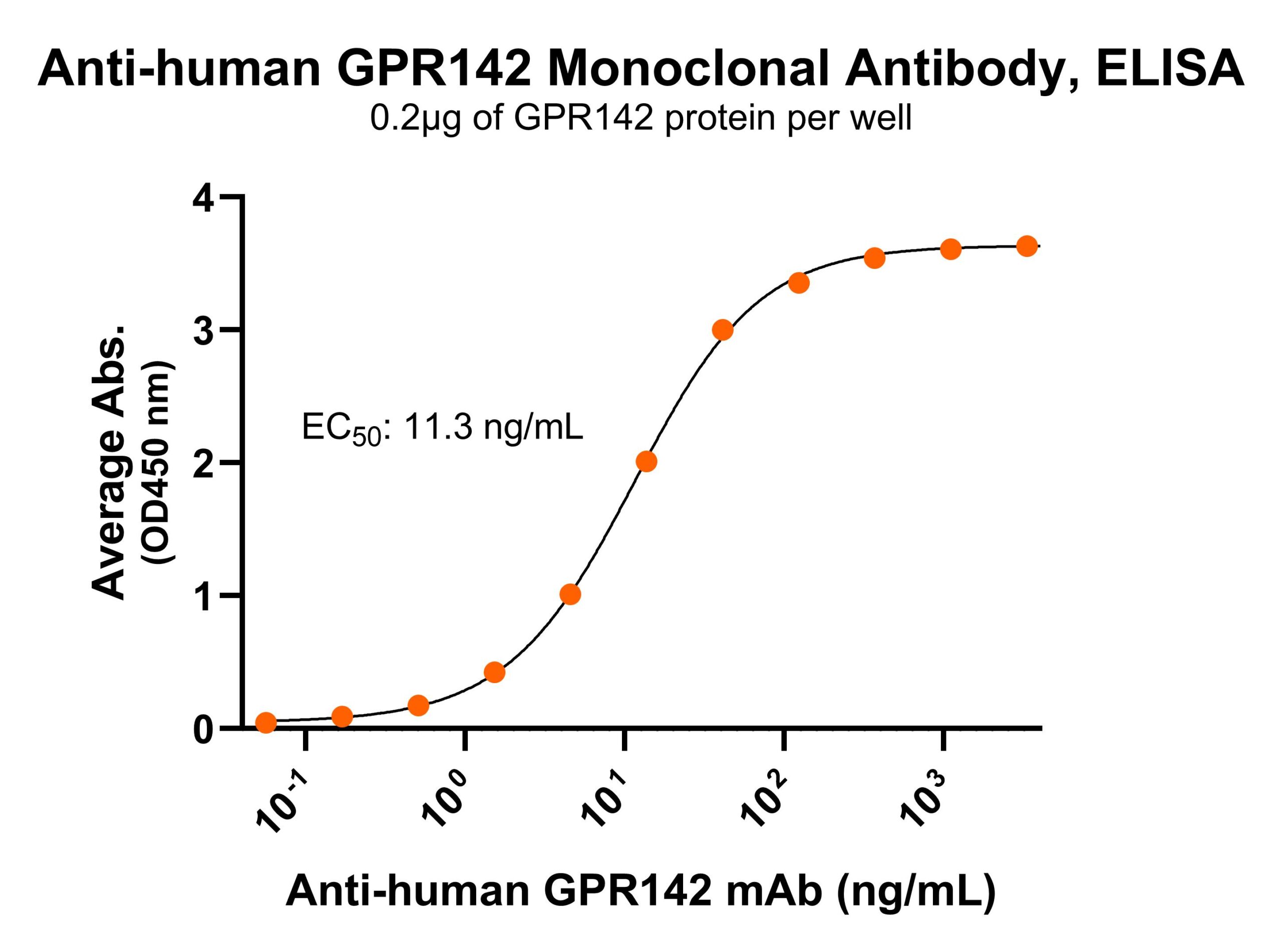
Product Name: GPR142, Monoclonal Antibody
UniProt #: Q7Z601
Background and Alternate Names
Human G protein-coupled receptor 142, is a 7-transmembrane G protein-coupled receptor (GPCR) and member of the rhodopsin family. GPR142 is a Class A GPCR, primarily expressed in pancreatic islet β cells and gastrointestinal enteroendocrine cells. It functions as a nutrient sensor for aromatic amino acids such as tryptophan and phenylalanine is a tryptophan-activated Gαq-coupled receptor with enriched expression in pancreatic islets. GPR142 therapeutics are an active area of research, mainly focused on type 2 diabetes and metabolic disease, because of the receptor’s role in enhancing glucose-dependent insulin and incretin secretion.. Human GPR142 protein has ~85% sequence homology with mouse GPR142.

 MW: Molecular Weight marker reduced condition